Agentic commerce is here. Post-purchase infrastructure is not ready.
At E-commerce Berlin Expo 2026, the most repeated phrase was probably "agentic commerce." AI shopping agents that browse, compare, and buy on behalf of consumers. Marcus Diekmann opened with "Scale up AI or die." Zalando presented on AI agents transforming decision-making. Amazon's Buy for Me feature is reportedly processing over $1 billion per month. Phia raised $35 million. Kleinanzeigen.de integrated directly into ChatGPT, making 58 million listings searchable through conversation.
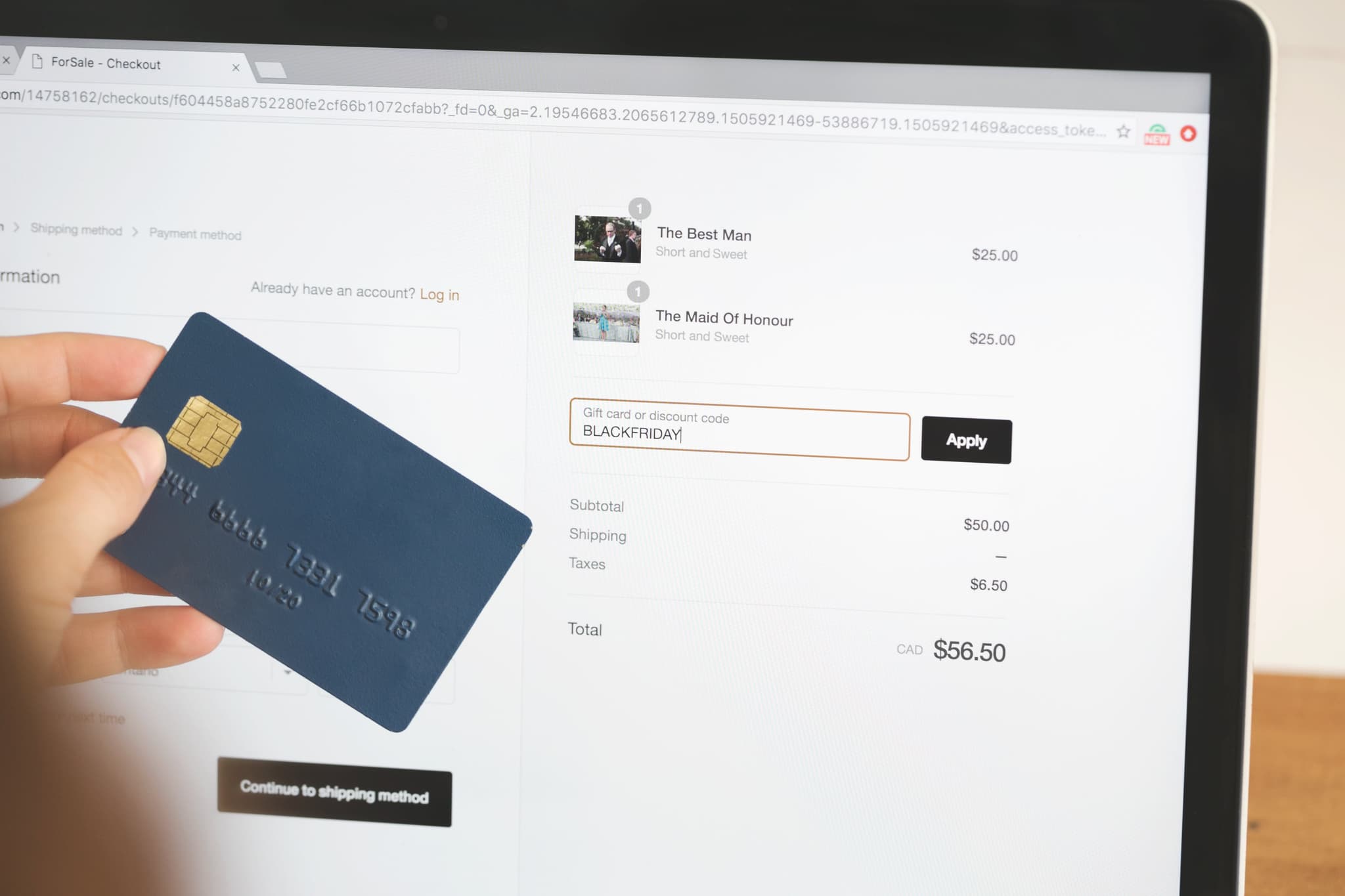
The investment and attention are concentrated on one side of the transaction: the purchase. AI agents that find products, negotiate prices, complete checkouts. Google's Universal Commerce Protocol aims to standardize how agents interact with storefronts. Shopify is building agent-compatible commerce APIs.
There is comparatively little discussion about what happens after the order is placed.
The post-purchase blind spot
When a human shops and needs to return something, the process is often already frustrating. Navigate to a website, find the return policy, fill out a form, wait for a label, package the item, track the status. Most brands have digitized parts of this, but the underlying flow is still designed for a human clicking through screens.
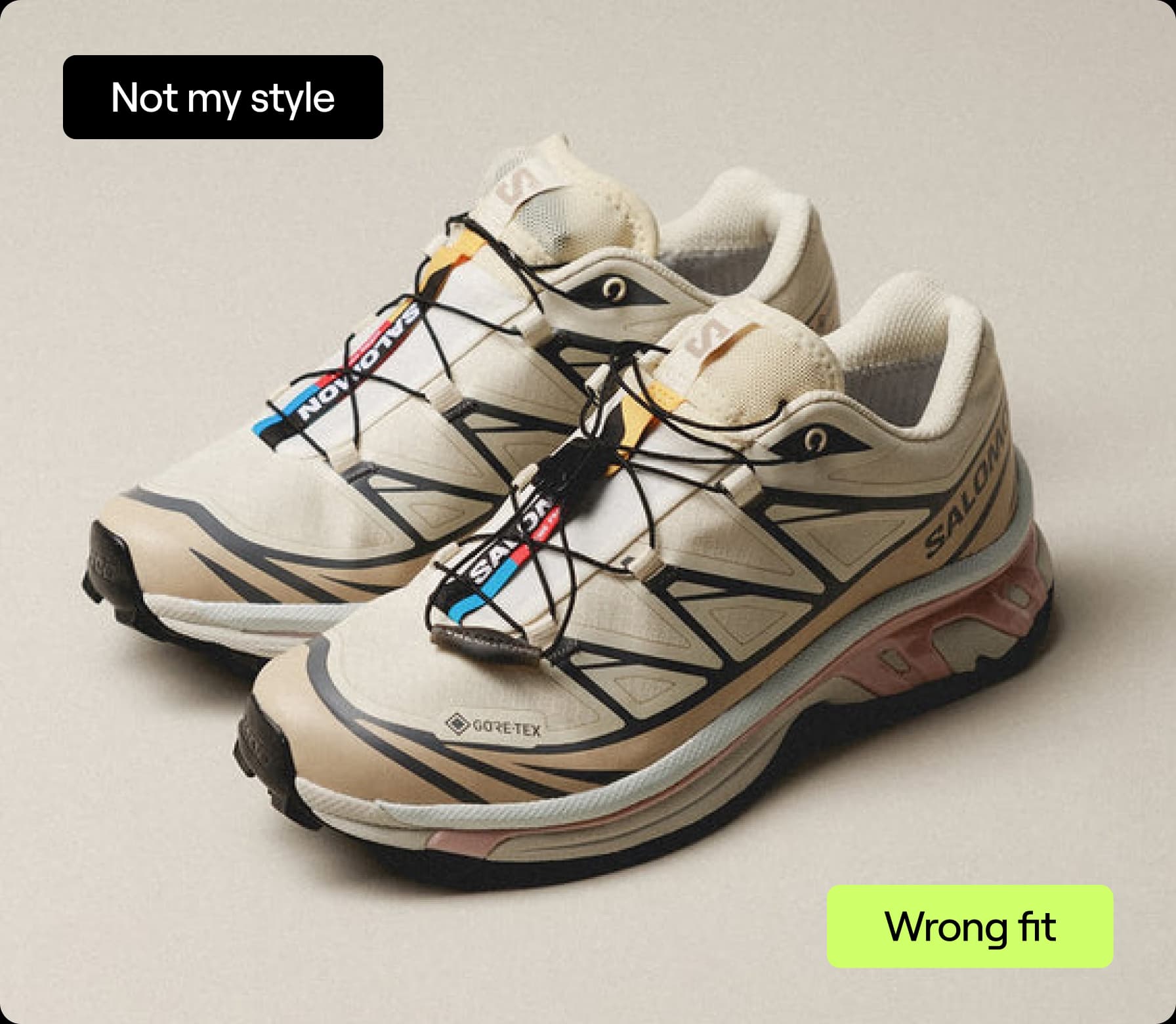
Now consider what happens when an AI agent makes the purchase. The agent selected the product based on a set of preferences. If the item doesn't match – wrong size, different color than expected, quality issue – the return needs to happen through the same agent, or at least through a machine-readable interface.
A return portal designed for human navigation does not work for an AI agent. There is no "click here" for a machine. There are APIs, webhooks, and structured data exchanges.
This creates a gap. The purchase side of ecommerce is being rebuilt for machine-to-machine interaction. The post-purchase side – returns, exchanges, refunds – largely is not.
What agent-compatible post-purchase actually requires
For returns to work in an agentic commerce environment, a few technical properties become necessary rather than optional:
API-first architecture. The entire return process – initiation, reason submission, eligibility check, label generation, status tracking, resolution – needs to be accessible through structured API calls. An AI agent cannot parse a web form, but it can send and receive JSON.
Webhook-driven status updates. Agents need to receive real-time notifications about return status changes. Polling a portal for updates is a pattern designed for humans refreshing a browser. Machines work on event-driven architectures: something changes, a webhook fires, the agent processes the update.
Structured return reason data. When an AI agent initiates a return, the reason data needs to be machine-readable and standardized. "Size too small" as structured data is actionable. A free-text field is not – at least not without additional NLP processing on the receiving end.
Programmatic exchange logic. If the return reason is a size issue, an agent-compatible system should be able to suggest or execute an exchange through the same API. The agent requests an exchange, the system checks inventory, confirms the swap, and generates the appropriate logistics – all without a human in the loop.
Decision rules that work for automated clients. Return policies today are written in natural language: "Returns accepted within 30 days for unworn items with tags attached." An AI agent needs this as machine-readable policy – conditions that can be evaluated programmatically before the return is even initiated.
The structural question for ecommerce brands
The relevant question is not whether AI shopping agents will handle returns. If they handle purchases, they will inevitably handle returns. The question is whether the post-purchase infrastructure is designed for it.
Most return systems were built in a specific era: a customer visits a portal, selects items, chooses a reason from a dropdown, and receives a shipping label. This workflow assumes a browser, a screen, and a human making selections. It works, and for the majority of transactions today, it will continue to work.
But the architecture underneath matters. A system that is API-first – where the portal is one interface on top of an underlying API – is structurally ready for a world where machines initiate returns. A system where the portal is the product has a harder migration path.
This distinction is not theoretical. It affects how quickly a brand can integrate with new commerce protocols, how easily returns data flows into other systems (ERP, warehouse management, and analytics), and how automated the resolution process can become.
What the data suggests about readiness
There is no comprehensive benchmark yet on how many ecommerce brands have API-accessible return processes. But proxy indicators suggest the number is low.
A 2026 industry survey of DACH retailers found that returns automation is considered a "major use case" for AI this year – but the focus remains on automating existing human workflows (eligibility checks, label generation, exchange recommendations) rather than building machine-to-machine interfaces. The automation conversation is still about making the portal smarter, not about making the portal optional.
The retailers most likely to be ready are those already using returns platforms with full API coverage and webhook integrations – because the technical foundation is already there, even if the agent-facing use case was not the original design intent.
Exchanges are the interesting case
Purchases and refunds are relatively simple transactions. Money moves one direction. An API call can handle that.
Exchanges are more complex. A customer – or an AI agent – wants to return one item and receive a different one. This involves inventory checks, price difference calculations, potentially a new payment, shipping logistics for both directions, and accounting reconciliation. If the exchanged item is also returned later, the chain of transactions needs to remain traceable.
In a human-operated return portal, this complexity is managed through UX: screens that guide the customer through options. In an agent-operated environment, this complexity needs to be managed through API logic: structured requests and responses that handle the full exchange lifecycle programmatically.
The brands that have already invested in deep exchange capabilities – full catalog access, inventory-aware suggestions, and chain tracking for sequential exchanges – are architecturally closer to agent-compatible post-purchase than those offering simple same-item swaps or coupon-based workarounds.
A quiet infrastructure shift
Agentic commerce will not arrive as a single moment. It will arrive gradually, as AI assistants handle a growing share of routine commerce tasks. The brands and platforms that are ready will not be the ones who rushed to build "AI return agents" as a feature. They will be the ones who already built their post-purchase infrastructure on APIs, webhooks, and structured data – because that architecture serves both human and machine clients.
The purchase side of ecommerce spent 2024 and 2025 rebuilding for agents. The post-purchase side has not had that conversation yet.
It probably should.
Automate and manage your returns easily starting now
Sources and references
- E-Commerce Berlin Expo 2026 – recap of the 10th edition (Marcus Diekmann keynote, Zalando AI agents presentation)
- Amazon Rufus / Buy for Me at $1B/month in additional revenue (Exciting Commerce, Feb 9 2026)
- Amazon Buy for Me feature launch (Forbes, Apr 2025)
- Phia raises $35M Series A (TechCrunch, Jan 27 2026)
- Phia $35M Series A – fintech/agentic commerce angle (Forbes, Jan 29 2026)
- Kleinanzeigen.de ChatGPT integration, 58 million listings (retail-news.de, Feb 2026)
- Google Universal Commerce Protocol (UCP) announcement (Google Blog, Jan 11 2026)
- UCP developer site
- Shopify agent-compatible commerce APIs (Storefront MCP)
- Kassenzone: Wachstumsstrategien 2026 – Agentic Commerce (Jan 29 2026)
- Kassenzone: Google UCP als neues Handelsgefängnis? (Jan 22 2026)
- Exciting Commerce: AI shopping agent landscape – Wizard (Feb 25 2026)
- Exciting Commerce: Phia $35M in AI Fashion Commerce (Feb 17 2026)
- Best AI E-Commerce automations for DACH retailers (2026) (E-Commerce Germany News – DACH retailers survey, returns automation as major use case)